Your Ultimate Guide to Identifying Cooking Pans and Tools by Name
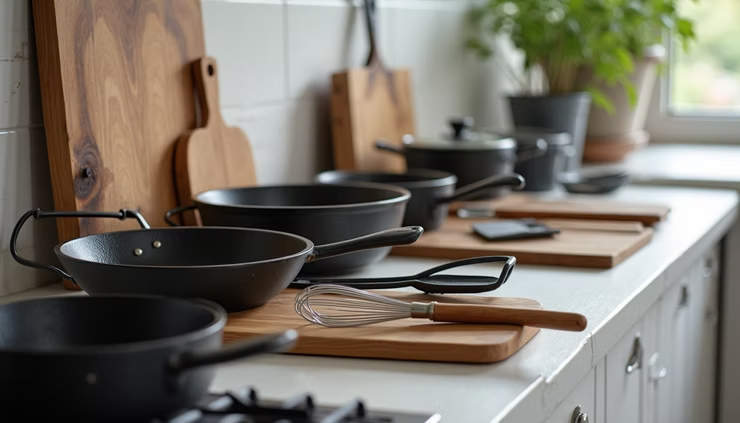
Cooking can be a joyful experience when you know your way around the kitchen tools. But for beginners, the variety of pans and utensils can feel overwhelming. This guide breaks down common cooking pans and tools with easy names and clear ways to identify them. Knowing these basics helps you pick the right tool for each recipe and improves your cooking skills.
Understanding Cooking Pans
Cooking pans come in many shapes, sizes, and materials. Each type serves a specific purpose. Here are the most common pans you will find in any kitchen:
Frying Pan (Skillet)
- Description: A flat-bottomed pan with low, slightly flared sides.
- Material: Often made from stainless steel, cast iron, or non-stick coated aluminum.
- Use: Ideal for frying, searing, and browning foods like eggs, pancakes, and meats.
- How to Identify: Look for a wide flat surface with a long handle and low sides.
Saucepan
- Description: A deep pan with tall, straight sides and a long handle.
- Material: Usually stainless steel or aluminum.
- Use: Perfect for boiling, simmering, and making sauces or soups.
- How to Identify: Taller than a frying pan, often comes with a lid.
Sauté Pan
- Description: Similar to a frying pan but with straight, higher sides.
- Material: Stainless steel or non-stick.
- Use: Great for sautéing vegetables or cooking dishes that need stirring.
- How to Identify: Flat bottom with straight sides and a lid.
Stockpot
- Description: Large, deep pot with two small handles on each side.
- Material: Stainless steel or aluminum.
- Use: Used for making stocks, soups, and boiling pasta.
- How to Identify: Tall and wide with a lid and two handles.
Cast Iron Skillet
- Description: Heavy pan made from cast iron with excellent heat retention.
- Use: Ideal for frying, baking, and slow cooking.
- How to Identify: Thick, heavy, usually black or dark gray with a rough surface.
Essential Cooking Tools and How to Identify Them
Besides pans, several tools make cooking easier. Here are some basic tools every beginner should know:
Chef’s Knife
- Description: A large, broad blade tapering to a point.
- Use: Versatile knife for chopping, slicing, and dicing.
- How to Identify: Usually 8 to 10 inches long with a sharp edge and sturdy handle.
Kitchen Knife
- Description: Smaller than a chef’s knife, often used for precise cutting.
- Use: Peeling, trimming, and small slicing tasks.
- How to Identify: Shorter blade, easy to handle for detailed work.
Peeler
- Description: Small tool with a sharp blade attached to a handle.
- Use: Removing skin from vegetables and fruits.
- How to Identify: Compact, often with a swivel blade.
Spatula
- Description: Flat, broad tool with a handle.
- Use: Flipping pancakes, burgers, or stirring food in pans.
- How to Identify: Thin, flexible blade, sometimes slotted.
Whisk
- Description: Wire loops attached to a handle.
- Use: Beating eggs, mixing batter, or whipping cream.
- How to Identify: Multiple thin wires forming a balloon shape.
Tongs
- Description: Two arms joined at one end, used to grip food.
- Use: Turning meat, serving salad, or grabbing hot items.
- How to Identify: Long handles with gripping ends, sometimes with locking mechanism.
Colander
- Description: Bowl-shaped container with holes.
- Use: Draining water from pasta or washing vegetables.
- How to Identify: Usually made of metal or plastic with many small holes.
Cutting Board
- Description: Flat board used as a surface for cutting.
- Use: Protects countertops and keeps knives sharp.
- How to Identify: Made of wood, plastic, or bamboo, often rectangular.
How to Choose the Right Pan or Tool for Your Cooking
Knowing the names and looks of pans and tools is just the start. Choosing the right one depends on what you want to cook:
- For frying or searing: Use a frying pan or cast iron skillet.
- For sauces and boiling: Use a saucepan or stockpot.
- For sautéing: Choose a sauté pan with straight sides.
- For baking or roasting: Cast iron skillets work well.
- For cutting and prepping: Use the chef’s knife and cutting board.
- For peeling: Use a peeler.
- For mixing: Use a whisk.
- For flipping or serving: Use a spatula or tongs.
- For draining: Use a colander.
Tips to Maintain Your Cooking Pans and Tools
Taking care of your pans and tools extends their life and keeps them working well:
- Non-stick pans: Avoid metal utensils to prevent scratching.
- Cast iron: Season regularly with oil to keep it non-stick and rust-free.
- Knives: Keep them sharp and store safely.
- Wooden cutting boards: Clean and oil to prevent cracking.
- Peelers and whisks: Wash and dry immediately to avoid rust.
Recognizing Quality in Cooking Pans and Tools
Quality affects how well your pans and tools perform. Here are signs of good quality:
- Weight: Heavier pans like cast iron hold heat better.
- Material: Stainless steel is durable; non-stick is easy to clean.
- Handles: Should be sturdy and comfortable to hold.
- Construction: Look for pans with thick bottoms for even heat.
- Tools: Knives with full tang (metal running through handle) are stronger.